

As one of the new breed of Chinese manufacturers, with the resources of the Stellantis group (owners of FIAT and Chrysler) to draw on, hopes were high when Leapmotor announced it was designing a new SUV range.
Christened the C10, the new car is a mid-sized wagon featuring generic styling, that while not unpleasant, has a ‘sameness’ to other vehicles in the class.
Following current EV design trends, the front is blunt, a solid piece with integrated bumper and a slimline air intake mounted low, providing air to the cooling system.
Twin vertical scoops direct air through the wheel wells, however the front still looks like a discarded Apollo-era heat shield.
The generic nature of the design is the biggest flaw, there is no ‘signature’ element to declare a design ethos, instead it has the feel of a car that has assimilated multiple cues from those around it.
The upsides are a decent flat roof, allowing roof racks to carry additional load, as well as wide opening doors for easy access.
Our test car was the ‘Design’ variant, which added 20” spoked alloy wheels to the external package.
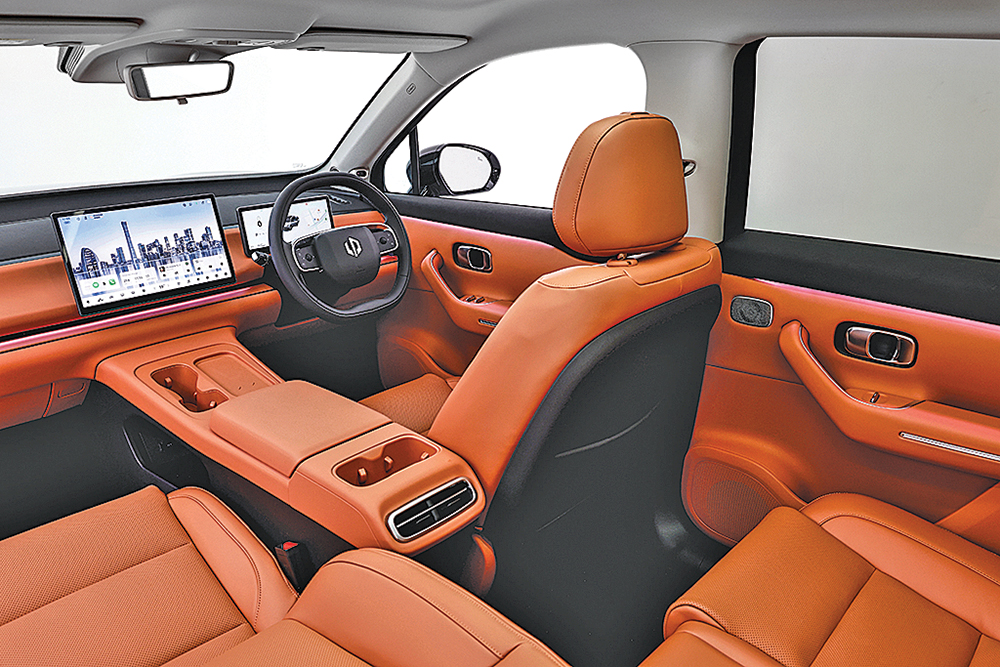
Inside, the story was the same, it was pleasant, but with the same air of generic fitout, instead of claiming a specific design feature.
There is plenty of fruit, including a 14.6” central touchscreen and a 10.25” digital instrument display for the driver, along with dual zone climate control and multiple USB charging ports. While there was DAB/AM/FM and Bluetooth connectivity, interestingly for a new car there was no Apple or Android functionality, a retrograde step for those used to connecting their phone to the vehicle.

Also odd was the lack of an auto-dimming rear view mirror, while the passenger door mirror gave an unrealistic view of approaching traffic, giving the impression of more space between vehicles, but without a warning message to the driver.
The powered and heated front seats (four-way adjustable for the passenger and 10-way for the driver) were comfortable, with all seats finished in silicone leather, with a ‘TechnoLeather’-wrapped steering wheel.
While there was the usual array of buttons and switches on the wheel face, none were labelled, making me wary of randomly flicking switches with no idea of what was about to happen.
Similarly, the door-mounted window switches were reversed, pull for up and push for down, but with no explanatory markings.
While these are not fatal flaws, it is the accumulation of minor issues that made the car feel wrong and counter-intuitive for those transferring from other cars.
The biggest challenge was the need to download and activate the Leapmotor app to my smartphone to fully access the C10’s controls.
After more than 90 minutes of trying and failing to connect the app, we decided to use the ‘smart card’ to operate the C10.
At this point, I acknowledge owners should not face the same challenges we did, unfortunately this is what we have to judge the car on.
To unlock the car, the card has to be placed on the driver’s door mirror, contacting an embedded chip reader.
Not only does this unlock the car, and relock it once you exit the vehicle, it also starts the electric drive motor.
While it is nice to have the air conditioning operating when you enter the car, it means you are immediately drawing power from the battery pack, in the same way an ICE power unit will consume fuel while idling.
This means the unwary can exit the car, leaving everything running, and return later to discover the energy levels depleted.
With a projected range of around 400 kilometres, our test included runs at 100km/h, as well as urban and suburban travel at 40, 50 and 60km/h, the Leapmotor delivered around 350 kilometres before needing a recharge.
This total included energy harvested by the regenerative braking system, as I used the ‘one pedal’ option, where the accelerator became a rheostat, push to go, lift to stop.
This allowed the generator to brake the C10 and convert driveshaft rotation into electrical energy, adding to the overall driving range.
The 360 degree camera also impressed, while not industry leading, it gave a good view of the general surroundings and made for accurate manoeuvring in tight spaces.
The frustration with the C10 was a feeling the designers tried to be too clever, as though conceding they could not build a better car, they would build a technical masterpiece.
This means every driver aid and convenience item was added to the standard list, but without considering how they would be integrated into the driving experience.
I fully support the use of advanced technology to enhance the vehicle’s abilities, but in the C10 it frustrates the driver through a combination of overly aggressive interventions and a poorly thought out interaction between car and driver.
Examples include opening the tailgate, with no external button and a non-functioning smartphone app, this required the car to be unlocked, the driver then has to navigate multiple screens on the central display, before activating the switch.
The lane keep assist, including a separate ‘lane centring’ function, had to be disabled every time the car was driven, to avoid constant and aggressive steering interventions, the lane centring gave only a few centimetres before audible alerts were sounding through the car.
At this point, the safety aspect of the technology is overridden by the need to constantly counteract the sudden lurches of the steering wheel, and the driver is left feeling on edge, waiting for the next uninvited intervention.
Add the lack of smartphone operability, via the non-functioning app, to these distractions and the C10 was a disappointment.
Other new arrivals faced similar challenges, and have found ways to improve their offerings, it remains to be seen if Leapmotor can make the necessary gains.

Gary is an experienced motoring journalist, and a graduate of Griffith University.