

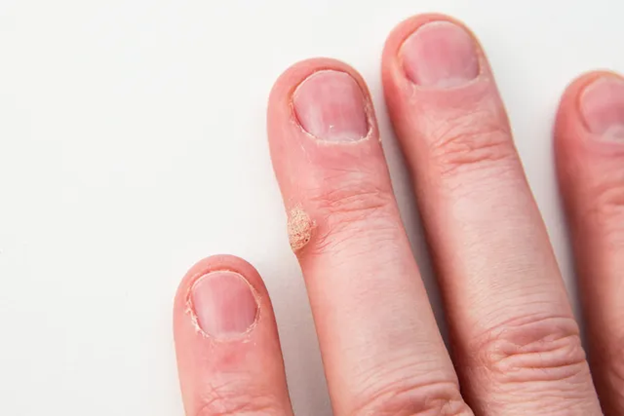
Warts are one of those skin issues that look small but feel frustrating. They often appear without warning, stick around longer than expected, and can make people feel self-conscious. While many warts are harmless, knowing what type you’re dealing with matters more than most people realize. Each type behaves differently, spreads differently, and responds better to certain treatments. This guide breaks down the most common types of warts you’ll see in pictures online and explains how each one can be treated safely and effectively.
Common Warts (Verruca Vulgaris)
Common warts usually show up on the hands, fingers, or around the nails. In pictures, they appear rough, raised, and grainy, often with tiny black dots inside. Those dots are clotted blood vessels, not dirt. These warts are caused by strains of the human papillomavirus that enter through small cuts in the skin. People who work with their hands a lot or bite their nails tend to get them more often.
Treatment for common warts focuses on slowly breaking down the thick skin layers. Over-the-counter solutions can help, but results take patience. Many people now lean toward a natural treatment for warts when dealing with stubborn cases, especially if the skin becomes irritated easily. Consistency is key. Applying treatment daily, keeping the area clean, and avoiding picking can stop the virus from spreading to nearby skin. New research also suggests that supporting immune health helps the body clear the virus faster over time.
Plantar Warts (Warts on the Soles of the Feet)
Plantar warts grow on the bottoms of the feet, usually on the heel or ball of the foot. Unlike other warts, they often grow inward because of pressure from walking. In pictures, they look flat, thick, and may have a callus-like surface. Many people mistake them for corns at first, but plantar warts tend to hurt when squeezed from the sides rather than pressed from the top.
Treating plantar warts takes a bit more effort because of their depth. Soaking the feet in warm water before treatment can soften the skin and improve results. Some people prefer slow, skin-friendly options made with Amoils which focus on calming the area while targeting the wart tissue. Foot hygiene plays a big role here. Wearing breathable shoes, changing socks daily, and avoiding walking barefoot in public showers can prevent reinfection. Recent dermatology updates also highlight that early treatment reduces pain and lowers the risk of spreading the virus to other parts of the foot.
Flat Warts (Plane Warts)
Flat warts are smaller and smoother than other types and often appear in clusters. You’ll commonly see them on the face, neck, arms, or legs in pictures. They’re usually skin-colored or slightly darker and can spread quickly through shaving or skin-to-skin contact. Children and teenagers tend to get flat warts more often, but adults aren’t immune.
Because flat warts spread easily, gentle treatment matters. Harsh methods can irritate the skin and cause even more warts to appear nearby. Many dermatologists now suggest mild, gradual approaches instead of aggressive removal. Keeping the skin barrier healthy is just as important as treating the wart itself. Avoiding shared towels, razors, and skincare tools reduces spread. Recent insights show that flat warts often clear once the immune system recognizes the virus, so stress management and proper sleep can indirectly support healing.
Filiform Warts (Thread-Like Warts)
Filiform warts look very different from other types. In pictures, they appear long, narrow, and finger-like, often growing around the eyes, lips, or nose. Because of their location, they can feel more noticeable even if they’re small. These warts grow quickly and can snag on clothing or get irritated during daily routines.
Treatment choices for filiform warts must be extra cautious due to the sensitive areas involved. Cutting or pulling them at home can cause bleeding or infection. Gentle topical solutions are often preferred, especially those designed for facial skin. Cleaning the area regularly and avoiding touching the wart helps prevent spread. New clinical observations suggest that early treatment is especially important with filiform warts, as they tend to multiply faster than other types. Addressing them early can also reduce cosmetic concerns and discomfort.
How to Choose the Right Treatment for Your Wart Type
Not all warts should be treated the same way, and that’s where many people go wrong. The location, size, and type of wart all matter. What works well for a common wart on the hand may not be suitable for a plantar wart on the foot or a filiform wart on the face. Paying attention to how the wart looks and feels can guide better decisions.
If a wart changes color, bleeds, or becomes painful, professional advice is always the safest option. For mild cases, steady home care combined with good hygiene often brings results. Staying informed about newer natural treatment for warts helps avoid unnecessary skin damage. With patience and the right method, most warts can be managed safely and effectively without stress.

The above article is paid content, and any information presented should be independently verified before making any decisions as a result of the content. This article does not constitute advice of any kind, nor does it represent the opinions of the website publisher.