


Amongst the hills of Western Sydney University’s Parramatta South campus, lies a collection of buildings dating back to the early 1800s. These buildings are a rich part of Parramatta’s early history, and have shaped the contemporary learning hub we experience today.
Western Sydney University (WSU) has recognised this rich history and implemented a Heritage Walk, with multiple stops around the campus detailing the building’s history from when it was built to present day.
The Heritage Walk is a self guided tour featuring several buildings of yesteryear, including the Female Orphan School, which housed orphaned girls (and later boys), and then became the Rydalmere Psychiatric Hospital, the Vernon Building, which housed children birthed by women in the female division of the Rydalmere Psychiatric Hospital, the Infants and Primary School which is located on the grounds of the Orphan School and others.
The Female Orphan School is a building with an illustrious past, one which I was lucky enough to learn about through a guided tour.
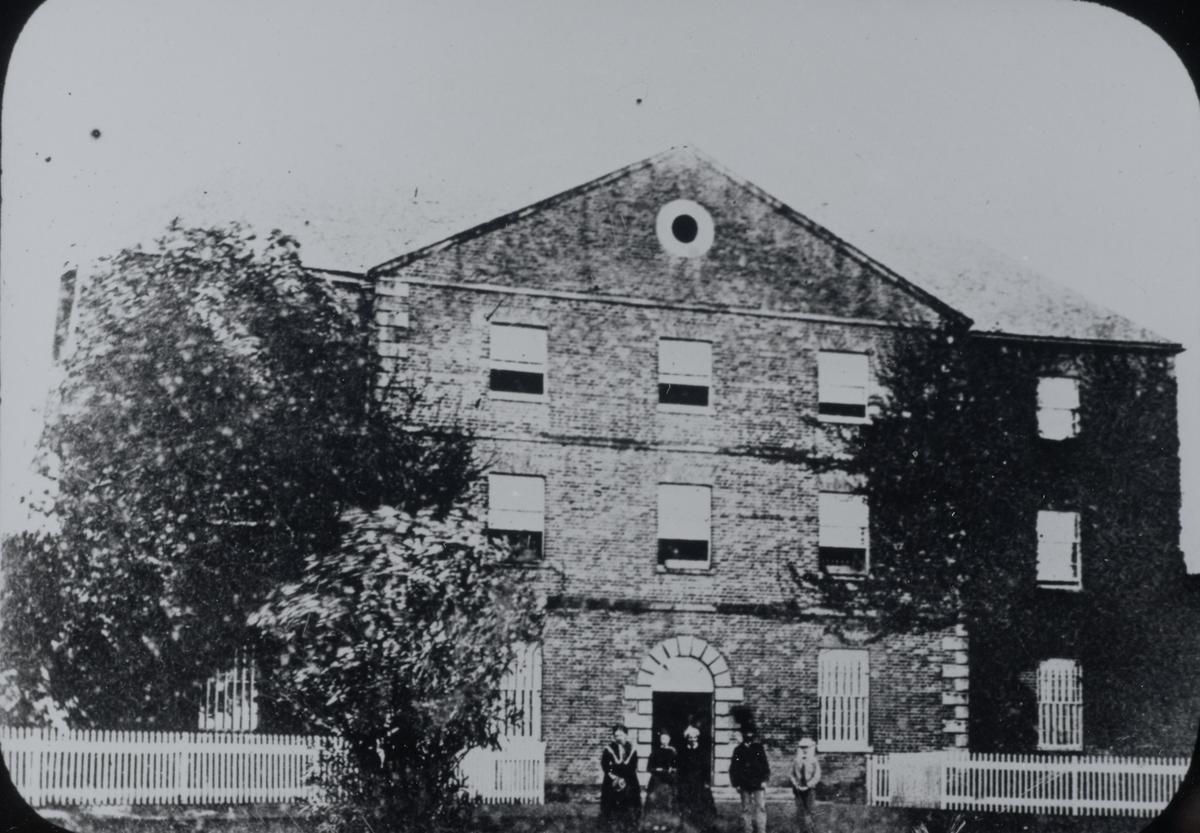
Built in 1813 and the oldest three storey building in Australia, the Female Orphan School was home to girls aged three to 13 who were otherwise unwanted. This wasn’t a terrible fate however, as the girls (and in 1850, boys as well) were treated with kindness and respect – a stark contrast to other institutions at the time.
Commissioned by Governor Lachlan Macquarie and his wife, Elizabeth, the School was meant to be just that, and more of a home than an institution. Mrs Macquarie modelled it after her own childhood home in Scotland in an effort to make it more appealing. The Governor and his wife strived to make the School a safe haven for young girls, away from the home’s original location in Sydney, surrounded by crime and debauchery.
The orphanage set out to create model citizens for the Sydney of tomorrow, so the children were given a regimented schedule and taught reading, writing, arithmetic needlework and farming skills. The grounds were completely self sufficient, using the 150-acre estate to house livestock and grow crops and fruit trees. Housed until they were old enough to work, children would report on their conditions and treatment once a year after departure, and be relocated by the School if conditions were deemed unsafe or unsavoury.

The School was closed in 1887, when a change in government policy favoured placing children with foster families, rather than an orphanage. The building was transformed into the Rydalmere Psychiatric Hospital within the next year.
The Hospital housed a variety of patients, from those with serious mental conditions, to those who were committed for insignificant reasons. The conditions within the Rydalmere Psychiatric Hospital were a different standard to that of the Orphan School, and as a result violence was prevalent, and a mortuary was soon built on the grounds.
The main Hospital was closed in 1969 and fell into disrepair until WSU acquired the land and began restorations in 2000.

This led to the building we see today, restored as close as possible to its original glory.
The building now serves as the home to the Whitlam Institute, a research facility focusing on efforts toward democracy, equality, and social justice, as well as the Margaret Whitlam Gallery.
Tours of the Female Orphan School are offered on Wednesdays, Thursdays and Sundays, telling tales of a time that is otherwise unknown, and weaves a rich tapestry of life in early Australia.
If you’re interested in Parramatta’s history, this is something I highly recommend. Tours can be booked via http://www.whitlam.org.

Madeline Dantier is the author of the Experience Parramatta series, hosted by Parra News.