

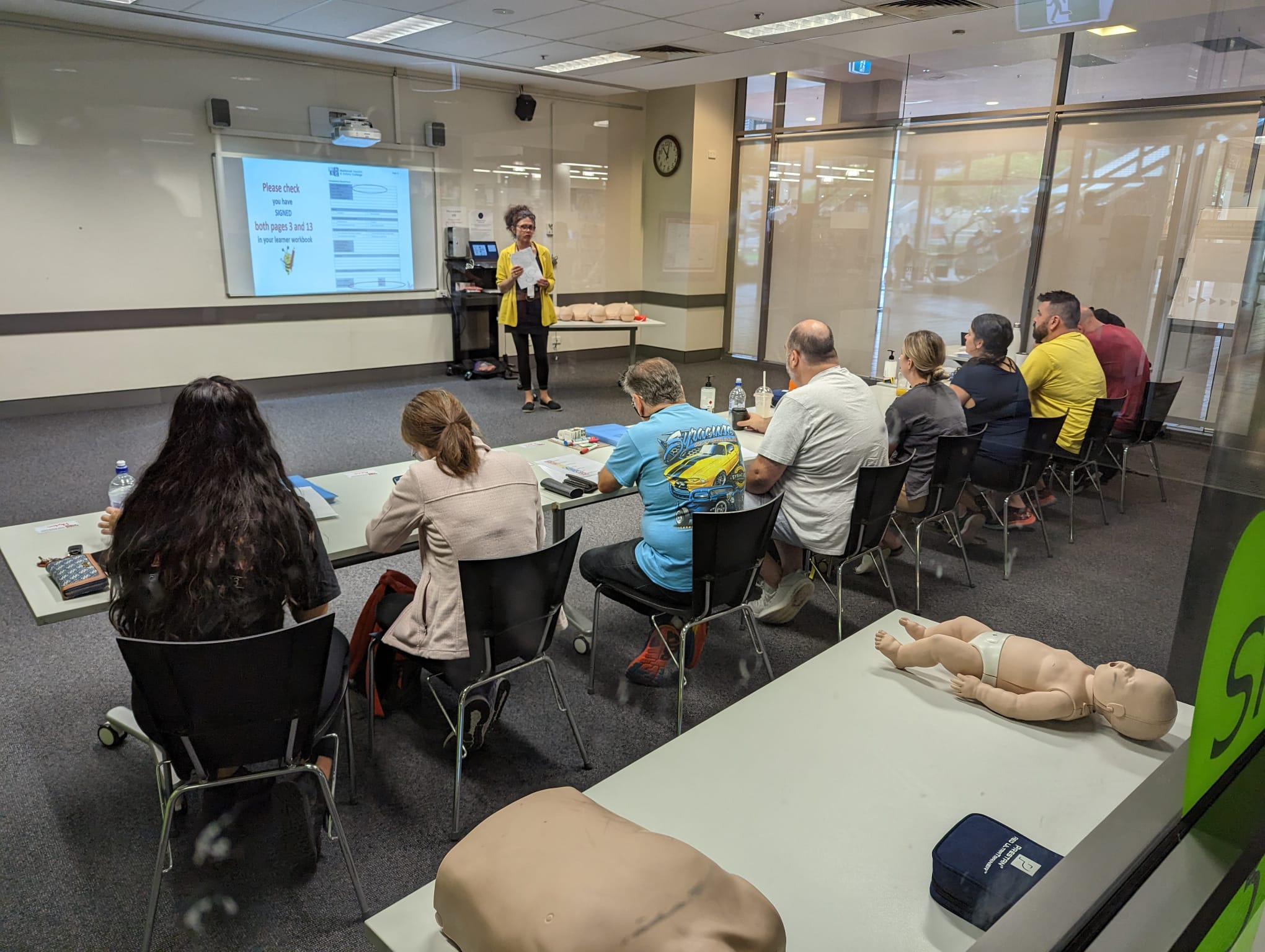
Knowing what to do in the first few minutes of a medical emergency can be the difference between life and death, yet many Australians lack the first aid skills and confidence to take action.
According to the latest data from the NSW Bureau of health, ambulances in Western Sydney take on average eight or nine minutes to respond to a life-threatening incident.
While that’s an improvement on the response times of 2022 when wait times in Blacktown blew out to 10 minutes, those early moments before medical assistance arrives remain critical.
National First Aid Courses director Samuel Bohr said the first 10 minutes of a medical emergency were often known as the ‘Golden 10’.
“This narrow window of time immediately following a traumatic injury or cardiac arrest, is when life-saving care must be initiated to significantly increase the likelihood of survival,” Mr Bohr said.
“Simple assistance from bystanders, such as performing CPR, placing someone in the recovery position or stopping severe bleeding, can help stabilise a patient and potentially save a life before emergency crews reach the scene.
“And the reality is, these few minutes of a medical emergency are often managed by the people already on the scene – whether that’s family, members, co-workers or members of the public.”
According to the NSW Bureau of Health Information, median ambulance response times for life-threatening and emergency incidents across key Western Sydney areas in the October–December 2025 quarter were:
| Area | Cat 1 Life Threatening e.g cardiac or respiratory arrest |
Cat 2 Emergency e.g breathing problems, serious haemorrhage |
| Auburn | 9 minutes | 18 minutes |
| Blacktown | 8 minutes | 14 minutes |
| Blue Mountains | 8 minutes | 16 minutes |
| Campbelltown | 8 minutes | 15 minutes |
| Fairfield | 9 minutes | 16 minutes |
| Liverpool | 9 minutes | 15 minutes |
| Mt Druitt | 8 minutes | 15 minutes |
| Parramatta | 9 minutes | 14 minutes |
| Penrith | 8 minutes | 13 minutes |
For less urgent incidents, response times can be longer, ranging from around 36 to 45 minutes for urgent cases and up to an hour or more for lower-priority calls, depending on demand.
Mr Bohr said the figures highlight why everyday people often play a critical role in the first moments of an emergency.
“Ambulance response times in Western Sydney have improved and paramedics do extraordinary work, but even in the best circumstances help is still several minutes away.”
“That makes the actions taken by bystanders during those early minutes incredibly important. In fact your first aid skills could literally save a life.”
Why the First Minutes Matter
Medical experts say immediate first aid can dramatically improve survival and recovery in many emergencies.
In cases of cardiac arrest, brain injury can begin within four to six minutes if oxygen is not restored.
Research shows that immediate CPR performed by a bystander can double or even triple a person’s chance of survival before paramedics arrive, while survival chances decrease by around 10 per cent for every minute without CPR during cardiac arrest.
Bystander intervention is also critical in emergencies such as choking, severe bleeding, seizures and unconsciousness. However, many Australians still lack the confidence to step in and help.
Learning basic first aid and CPR gives people the confidence to act quickly and safely while professional help is on the way.
What to Do While Waiting for an Ambulance
There are several simple actions that can help stabilise someone during a medical emergency.
- Start CPR if the person is not breathing – Place the heel of your hand in the centre of the chest and push hard and fast until help arrives or the person starts breathing.
- Place someone in the recovery position – If a person is unconscious but breathing, gently roll them onto their side to keep their airway clear.
- Control severe bleeding – Apply firm pressure to the wound using a bandage, cloth or clothing if necessary.
- Assist someone who is choking – Back blows and chest thrusts can help dislodge an obstruction.
- Follow instructions from the 000 operator – Emergency call handlers can provide step-by-step instructions while paramedics are on the way.
Growing Demand on Emergency Services
Ambulance services across NSW continue to respond to record numbers of incidents and emergency calls, placing increasing pressure on emergency systems as communities grow. This made community first aid knowledge more important than ever.
“Paramedics are highly trained professionals, but they simply can’t be everywhere instantly,” he said.
“When more people in the community have first aid skills, someone nearby is able to step in during those critical first few minutes.”
He said learning first aid was one of the most practical skills Australians could have, with First Aid and CPR training taking as little as a day to complete.
“You hope you never need it, but if an emergency does happen, knowing what to do in those first 10 minutes can make a life-saving difference.”
National First Aid Courses (www.nfac.edu.au) is a leading provider of nationally recognised face-to-face first aid training, with courses available across Sydney, including locations in Campbelltown, Penrith and Parramatta.

The above article is paid content, and any information presented should be independently verified before making any decisions as a result of the content. This article does not constitute advice of any kind, nor does it represent the opinions of the website publisher.