

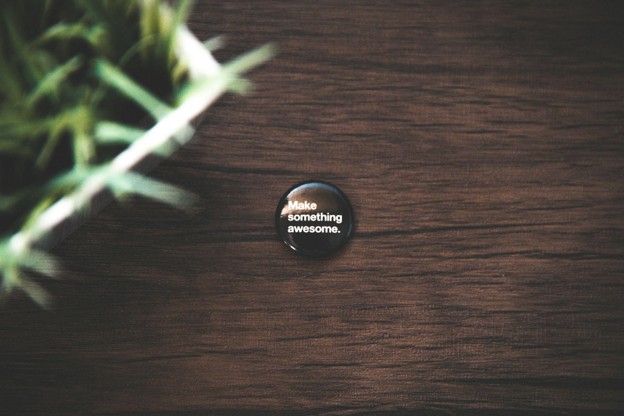
Marketing trends come and go with remarkable speed. What was considered essential promotional spend five years ago is often irrelevant today, replaced by whatever platform, format, or technology has captured attention in the interim. Against that backdrop of constant change, the humble badge has remained a consistent and effective promotional tool for well over a century, and it shows no signs of losing ground to the alternatives that have arrived and departed around it.
That staying power isn’t nostalgia. It’s the product of something the badge does better than most promotional formats, which is to turn the person wearing it into a visible, mobile, and personally invested carrier of a message. No other promotional item does that as simply, as affordably, or as effectively, and no amount of digital innovation has yet produced a substitute for the moment someone pins on a badge and walks out into the world wearing their affiliation, their cause, or their celebration.
The Psychology Behind Why Badges Work
The effectiveness of badges as a promotional and communication tool comes down to a few psychological principles that haven’t changed regardless of how the broader marketing landscape has shifted. The first is visibility. A badge worn at chest height is in the natural line of sight for anyone in conversation with the wearer, which gives it a passive but consistent exposure that a flyer, a sticker, or a digital impression can’t replicate in the same social context.
The second is identity. When someone chooses to wear a badge, they’re making a statement about who they are, what they support, or what group they belong to. That voluntary association gives the badge a persuasive dimension that imposed advertising doesn’t have. The person wearing it has opted in, which means the message it carries comes with an implicit endorsement that no paid placement can manufacture.
The third is conversation. Badges prompt questions and comments in ways that most promotional formats don’t. A well-designed badge at a corporate event, a community gathering, or a school function creates openings for exactly the kind of direct human interaction that marketing budgets spend considerable sums trying to generate through digital channels. That conversational dimension is one of the more underappreciated returns on what is typically a very modest investment.
The Range of Uses That Makes Badges So Broadly Applicable
Very few promotional items work equally well across the range of contexts that badges cover without modification. A Badge Maker who can produce everything from corporate name tags and event badges through to birthday badges, protest badges, school achievement badges, and hen night badges from the same production process is serving a demand that reflects how genuinely versatile the format is.
For businesses, badges serve identification, promotion, and brand reinforcement simultaneously. A well-designed name badge at a corporate event does more than identify the wearer. It communicates the brand standard of the organisation behind it and creates a consistent professional presentation across a team. For schools and sporting clubs, achievement and membership badges carry a motivational dimension that goes beyond their physical presence. For campaigns and causes, badges are one of the most cost-effective ways to build visible community around a message and generate the kind of social proof that comes from seeing many people publicly affiliated with the same idea.
The personal celebration market adds another dimension. Birthday badges, event badges for hens nights and milestone celebrations, and personalised badges for specific occasions give the format a warmth and specificity that more generic promotional items can’t match. The badge that says exactly what needs to be said, for exactly the person it was made for, produces a response that a branded pen or a corporate notebook simply doesn’t.
What Modern Badge Printing Actually Delivers
The perception that custom badges involve significant lead times, minimum order quantities, or design limitations that make them impractical for smaller projects reflects an older version of the industry rather than what modern badge production actually offers. The combination of digital design tools and efficient production processes has removed most of the practical barriers that once made custom badge orders more complicated than they needed to be.
No minimum order requirements mean that a single badge for a special occasion is as accessible as a bulk order of five hundred for a major event. Design possibilities that are effectively unlimited allow any artwork, photograph, logo, or message to be reproduced on a badge in any of the available shapes and sizes. Turnaround times of four business days from dispatch mean that even projects with tight timelines can be accommodated without the premium that rush orders once required. And online ordering processes that guide buyers through artwork requirements, size selection, and quantity pricing make the whole experience considerably more straightforward than the logistics of custom printing used to involve.
The range of sizes available, from compact 32mm badges suitable for subtle professional use through to larger 75mm formats that maximise visual impact, means the physical specification of the badge can be matched to the context it will be used in rather than settled for as the only available option.
Why Australian Made Matters for Custom Badge Orders
The choice between local and offshore badge production involves more than price, and the difference becomes most apparent at the points in the process where communication, quality control, and delivery reliability matter most.
Local production means the people making the badges understand the market they’re making them for, the regulatory environment they operate in, and the communication standards that Australian customers expect when something goes wrong or needs to be adjusted. It means lead times that reflect Australian logistics rather than international shipping windows that can extend unpredictably. And it means the quality assurance applied to the finished product is subject to Australian manufacturing standards rather than the variable oversight that offshore production can involve.
For organisations and individuals whose badge order represents something that matters, whether a school event, a corporate launch, or a personal celebration, the confidence that comes from ordering through an established Australian producer with a track record of quality and a reachable customer service team is worth considerably more than the marginal price difference that offshore alternatives sometimes offer.
A custom badge maker operating from Australian soil with over twenty years of production experience behind them brings a consistency and reliability to the ordering process that newer or offshore alternatives typically can’t match, and that consistency shows up in the finished product rather than just in the marketing materials describing it.
Why the Badge Endures
The promotional trends that came and went while the badge remained in consistent use all promised something the badge couldn’t deliver. Reach, scale, data, targeting. What none of them delivered as well as the badge is the simple, human experience of wearing something that says who you are, what you believe, or what you’re celebrating, and being seen wearing it by the people around you.
That experience hasn’t been disrupted by digital marketing, social media, or any of the other transformations that have reshaped how organisations communicate with their audiences. It persists because it operates at a level of directness and personal investment that technology hasn’t found a way to replicate, and because the badge’s combination of affordability, versatility, and immediate human impact makes it one of the few promotional formats that genuinely earns its place in every budget, at every scale, for every purpose it’s asked to serve.

The above article is paid content, and any information presented should be independently verified before making any decisions as a result of the content. This article does not constitute advice of any kind, nor does it represent the opinions of the website publisher.